
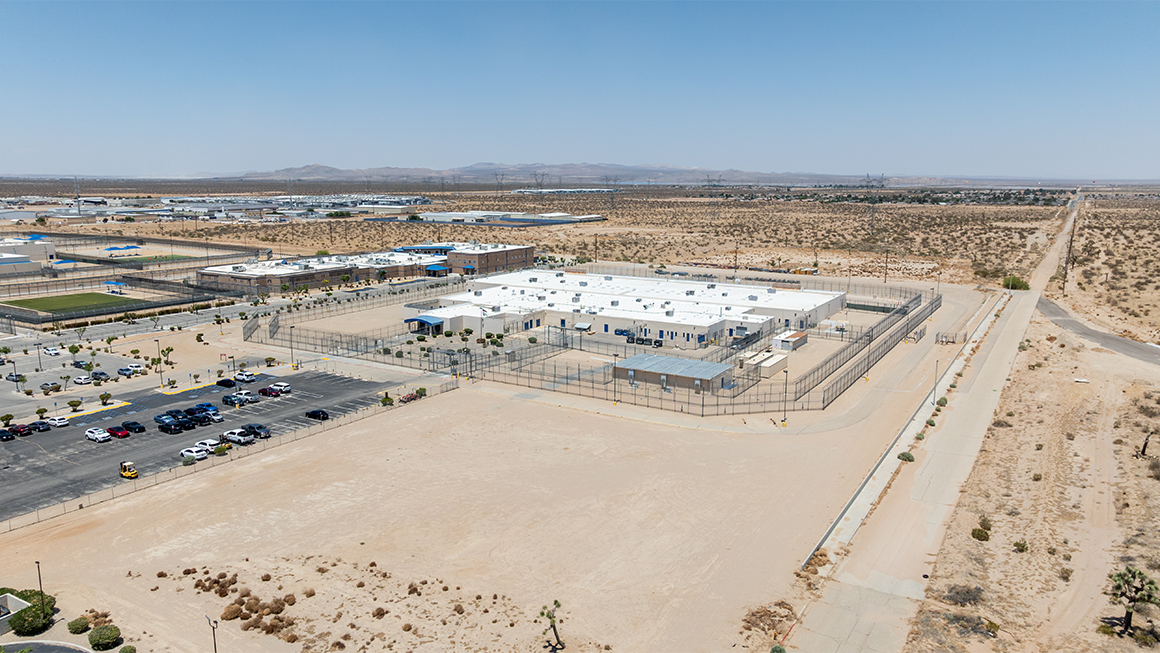
The US Department of Homeland Security (DHS) and its Immigration and Customs Enforcement (ICE) agency are in the midst of significantly expanding immigration detention. As of January, DHS is holding roughly 71,000 people across 224 facilities nationwide, including US citizens and people with legal status. DHS says detention is often used in cases where someone is viewed as a public safety risk, but only 14 percent of those arrested by this administration have violent criminal records.
The One Big Beautiful Bill Act increased ICE’s budget sevenfold, providing the agency $85 billion in resources in early 2026 (ICE will continue to operate even in the event of a federal government shutdown). Now, DHS is purchasing industrial warehouses and abandoned buildings to convert into immigration detention facilities designed to hold more than 92,000 detainees, at a cost of $38 billion; by comparison, the federal government spends about $33 billion annually on housing choice vouchers for households with low incomes. The recent acquisition of five such warehouses cost more than $500 million. But some local officials are now asking whether using these facilities as detention spaces would conflict with local zoning regulations—typically because prison uses are not allowed, either citywide or within the districts where the ICE facilities are planned—and what kind of oversight they could maintain over these projects.
In some cases, the federal government may use its legal authority to supersede—or preempt—state and local land-use and occupancy laws to develop and operate these facilities.
Here, we examine how localities regulate detention facilities using zoning laws to protect local infrastructure and ensure adequate safety for detainees. We then explore the legal aspects of what happens when federal authority meets local zoning laws as ICE sets up new detention facilities and some of the policy options states and localities are exploring to ensure these facilities adequately protect the health and welfare of people they detain and do not overburden surrounding communities.
Is ICE exempt from local regulations?
Cities, towns, and counties use zoning laws to regulate both the physical form of development (e.g., a building’s size or height) and its use (e.g., a shipping warehouse versus a warehouse used as a detention center). Using a facility as a shipping warehouse and using that same facility to detain and house thousands of people are fundamentally different uses of the land and would likely be treated differently under local zoning laws.
Unlike shipping or storage warehouses, DHS’s planned buildings need to be designed for continuous human habitation by thousands of people, with enough toilets and space, plus augmented fire safety and ventilation, as well as access to adequate drinking water, sewer facilities, and energy. Detention facilities are more akin to prisons than warehouses, both in terms of their use and the risks they pose to the safety and well-being of people detained there.
Zoning codes in most cities thus differentiate between facilities with such uses, often allowing one use in some districts and the other use in others.
Officials in some cities where ICE is considering locating facilities have argued that their use for detention would override local zoning. Some officials have expressed concerns about the safety and well-being of the people who are imprisoned in detention centers, as well as concerns about how these facilities may affect the surrounding community’s service and infrastructure capacity.
City staff of Greensboro, North Carolina, recently noted that an ICE facility being considered there would require a rezoning. In both Surprise, Arizona, and Social Circle, Georgia, officials said ICE hadn’t contacted them before the agency announced its facility placement plans.
We conducted a web search of recent news articles to identify examples of local resistance to planned ICE detention facilities. We documented seven cases that illustrate local-federal tensions, some where warehouse owners have ceased discussions with ICE, and others in which elected officials have convinced ICE to stop plans for the facilities.
Community opposition to ICE facilities raises questions about local and federal authority. What legal arguments exist for the federal government to override conflicting local standards and regulations, and how has this played out in the past?
There are two main ways the federal government may be exempt from local land-use law.
- State and local regulations cannot discriminate against the federal government—their laws have to be “generally applicable” to private and public entities alike (PDF). Courts have struck down laws specifically targeted at federal actions, such as immigration-related detention (PDF), or at federal entities, such as a mask ban recently attempted in California that applied only to federal officials (PDF). Zoning policies, however, are usually “generally applicable” because they regulate uses undertaken by many different actors and do not differentiate between federal government owners and other classes of property owners.
- State and local governments cannot “unduly interfere” with a core function of the federal government. While it’s too early to know how a court might rule if ICE asserted immunity from local zoning laws for its detention centers, there is a strong chance that courts will consider immigration detention to be a core federal function. Consequently, regulations that entirely prohibit such facilities may be viewed as an unconstitutional obstruction of that function.
Some officials in localities like Oklahoma City and Washington County, Maryland have taken these perspectives to heart, noting their limited ability to block federal detention facilities.
Despite this legal context, the federal government has historically pursued good-faith coordination with states and localities by prioritizing consultation with their governments and nearby communities when siting detention facilities and prisons. Surrounding governments and communities provide the workforce, services (such as fire protection), and utilities (like water) these facilities require, so coordination isn’t just about playing nice—it's functionally necessary.
For example, the Federal Bureau of Prisons (PDF), through the General Services Administration, had a long-standing “good neighbor” policy to encourage compatibility (PDF) with local land-use laws. And since 1988, Congress has mandated as a matter of federal law that all federal agencies “consult with local officials,” consider all of local zoning code, and comply with building codes “to the maximum extent feasible.”
But now, news from around the country suggests that in addition to establishing facilities without civil rights and detention condition oversight, DHS may in some cases be planning for detention facilities without collaboration with or even notification to local governments.
Local priorities and ICE facilities
Despite the federal government’s prospective general immunity to local zoning regulations, some local governments are attempting to use their control over zoning and building permitting to block some projects, and others exploring ways to ensure federally owned or operated detention centers align with local priorities. These approaches may rely on regulations that are generally applicable and do not “unduly interfere” with core federal functions, such as the following:
- Focusing on where in the jurisdiction the detention facility is located. Zoning regulations that determine where in a locality detention facilities can operate might be upheld by courts, especially if such regulations do not universally prohibit these facilities in all zoning districts, and the concerns about not allowing them in some places are related to the ability of the federal government to carry out its stated function.
- Tying regulations to public health and safety. Regulations that impose monitoring, inspection, or reporting requirements for detention facilities have been upheld by courts (PDF) and might be sustained when such requirements are tied directly to public health and safety. Health and safety are real concerns; recent and historical reports point to overcrowding and unsafe conditions at these facilities. For example, an ordinance requiring fire marshal inspections for high-occupancy dwellings might be enforceable as a generally applicable regulation that does not obstruct the federal government’s ability to safely enforce federal immigration laws.
- Zoning for adequate services and infrastructure capacity. General zoning laws that prohibit development that’s not supported by existing infrastructure (e.g., road or water infrastructure) or services (e.g., fire or emergency response) may be enforceable by courts, provided they don’t target federal projects and make detention facilities impracticable without significant local outlays.
Local and state governments are also protected by the “anticommandeering” doctrine, which prevents the federal government from coercing a state or locality into enforcing a federal law or carrying out a federal program. Even if the federal government asserts immunity from local zoning laws, it generally cannot compel a local government to fund or construct significant service or infrastructure expansions—such as expanded medical facilities or high-capacity sewer mains—specifically to support the unique demands of a detention center. This is especially true if local policies would deny such expansions for similar, nonfederal developments.
Warehouses aren’t generally designed for continuous occupancy by people, and their use in this manner could both strain local infrastructure and result in unsafe, unhealthy conditions for detainees. Though the federal government may be able to supersede some local zoning laws, some local governments are exploring other avenues through which they can influence ICE’s impact on people and their communities.
