
A starter home is more than a shelter. For millions of families, it represents an opportunity for homeownership and a legacy of wealth building for future generations.
But the availability of homes affordable to the typical first-time homebuyer—units that we think of as “starter homes”—has dwindled considerably in the past decade. Although 39 percent of active listings were priced under $200,000 in 2016, only 13 percent were priced as such in 2025. In high-cost markets, the starter home supply is even smaller.
Nationwide, building smaller, less expensive homes has become unprofitable because of the rising costs of construction and financing and because of zoning policies such as minimum lot size requirements. Recent federal policy changes, such as tariffs on homebuilding materials and immigrant deportation policies driving construction labor shortages, have exacerbated the problem.
In the face of these issues, increasing the supply of starter homes will require new ideas. One common-sense solution is expanding the growing market of factory-built homes, which are more efficient than other homes in terms of labor, materials, and time, making them faster and cheaper to construct. They are also increasingly purchased by young households, who are more likely to be first-time homebuyers. Our analysis of Home Mortgage Disclosure Act data shows that 41 percent of manufactured housing mortgage borrowers in 2025 were younger than 35, up from 37 percent in 2021.
Already, policymakers are taking steps to catalyze factory-built construction. In this article, we examine the implications of these actions and their potential to expand the supply of starter homes.
Factory-built homes could be the new starter homes
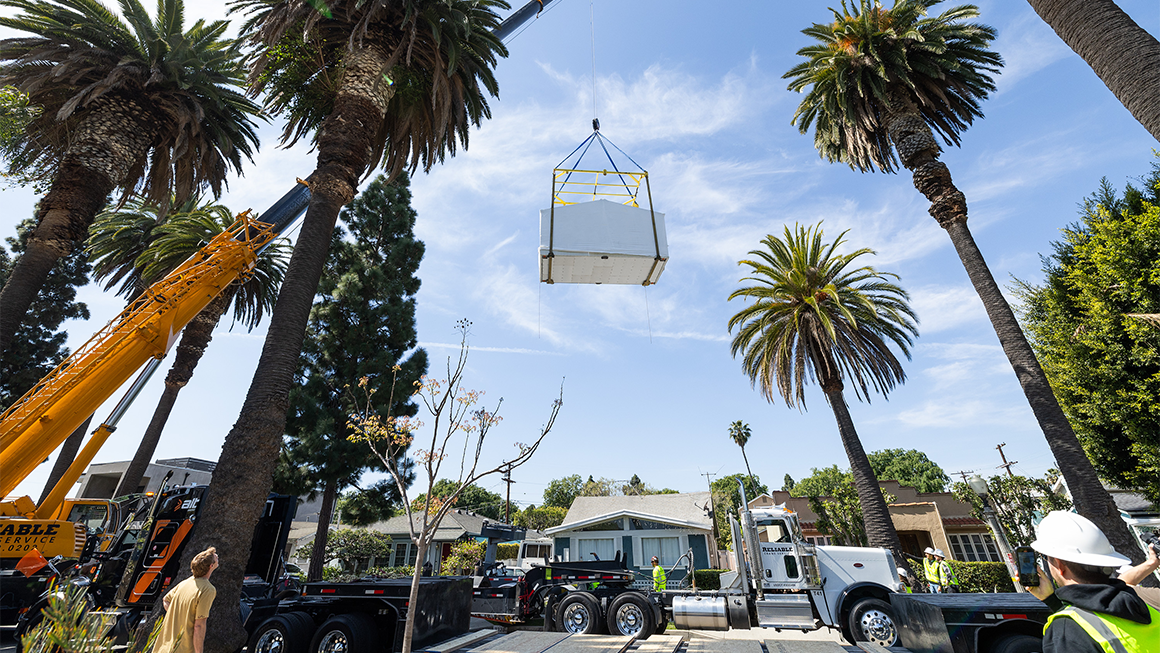
Two types of homes are built off-site. Manufactured homes adhere to national standards set by the US Department of Housing and Urban Development and are trucked to a site. Modular homes are built to state and local building codes and are assembled on-site.
Manufactured homes are substantially cheaper than site-built ones, but they tend to be smaller and are more common in low-cost states. Per square foot, manufactured homes cost about half what site-built homes cost: $84.45 versus $168.86. Modular homes also offer cost savings over site-built homes, costing between 10 and 20 percent less, and they can be completed more quickly.
Despite these cost savings, factory-built construction is at historic lows. Before the turn of the century, homes built off-site composed 27 percent of single-family homes. In 2025, that share fell to just 10 percent (roughly 103,000 units). Meanwhile, an average of about 240,000 manufactured housing units were shipped each year between 1977 and 1994.
Modular construction has experienced a similar trend, falling from 6 percent of single-family construction in 2000 to about 3 percent in 2025.
The decline in off-site construction is attributable to several factors. In the 1990s, manufactured housing purchases were often financed through personal property loans, which had lax credit standards at the time. But after a large spike in loan defaults, the credit standards were tightened, and the biggest lenders retreated from the market. Additionally, many localities have restricted the placement of manufactured homes through zoning codes over the past two decades, which has further constrained supply. On the modular side, the initial factory construction is expensive and difficult to expand, given the lack of standardization in building codes across states and localities.
How to expand the factory-built market
Catalyzing the factory-built housing market will require action at all levels of government. That includes policies reforming zoning, land use, and other regulatory changes at the state and local levels.
Already, the federal government is taking steps toward expanding factory-built construction as part of Congress’s major housing legislation, the 21st Century ROAD to Housing Act. But Congress should also consider the following regulatory changes around factory-built home purchasing and construction to alleviate the acute shortage of starter homes.
Eliminating the chassis requirement
Currently, federal law requires that manufactured homes be moveable by being undergirded by a chassis. Removing this outdated requirement would save about 9 percent in construction costs for manufactured housing. It would also allow for more flexible home designs, making it easier to modify manufactured units and fit into neighborhoods with stick-built homes, which could further spur demand.
Eliminating the chassis requirement, as proposed in the 21st Century ROAD to Housing Act, would also allow modular construction to expand by building units to national codes. Currently, modular manufacturers struggle to ship to other states, as certifying construction for an out-of-state manufacturer requires a costly inspection on-site.
Changing financing requirements
Before the off-site construction market can expand, it needs accessible financing options so factories can construct and buyers can purchase these homes. Fannie Mae and Freddie Mac, which are chartered to support underserved markets, do not purchase the personal property loans that make up 40 to 50 percent of manufactured home purchases.
The Federal Housing Administration (FHA) insures manufactured housing loans through its Title I program, which recently increased its loan limits (and would codify these increases through the 21st Century ROAD to Housing Act). But Title I is underused because of cumbersome underwriting and the lack of an avenue for securitization. The FHA could allow for automated underwriting, as it has done for its typical mortgage program (PDF). Ginnie Mae, with the consent of the Securities Industry and Financial Markets Association, could also allow Title I loans in its mortgage pools, as long as the loans were a small share of the total pool.
The 21st Century ROAD to Housing Act also commissions studies on the barriers to using FHA financing for modular housing. We already know that one of the main barriers is fund disbursement, meaning funds are not released until the relevant part of the construction is completed and inspected. Modular suppliers want to be paid when the materials are shipped, so holding funds until after inspection hinders modular development. More flexible financing arrangements could increase the use of modular construction.
Ultimately, factory-built construction is the key to more starter homes. But it’ll take efforts from leaders at all levels of government to ensure that the technology can keep costs down and allow for the construction process to expand.
