

Raj Chetty’s team at Opportunity Insights just released exciting new evidence (PDF) of success from the federal HOPE VI program. HOPE VI (PDF) replaced public housing projects that were rundown, isolated, and dangerous with new mixed-income housing and community facilities. Decades later, rigorous analysis finds that, compared with kids living in public housing projects that weren’t redeveloped, kids growing up in these revitalized projects:
- earn more as adults
- are more likely to attend college
- are less likely to be incarcerated
These latest findings dovetail with the Chetty team’s earlier analysis of the Moving to Opportunity (MTO) demonstration, which enabled families with low incomes to move from distressed, high-poverty neighborhoods to safer, well-resourced neighborhoods. There too, Chetty’s rigorous, long-term analysis revealed better adult outcomes for kids who got the opportunity to grow up in resource-rich neighborhoods.
Neighborhoods matter
Taken together, the quantitative evidence of long-term outcomes from both HOPE VI and MTO finally puts to rest the tired debate about whether to invest in people or places. It joins and confirms decades of research by many other scholars, using diverse sources of information and analysis methods.
There’s no doubt that kids from families with low incomes do better when they’re not isolated in distressed and disinvested neighborhoods. Opportunity-rich, inclusive neighborhoods constitute an essential pillar supporting families’ social and economic mobility.
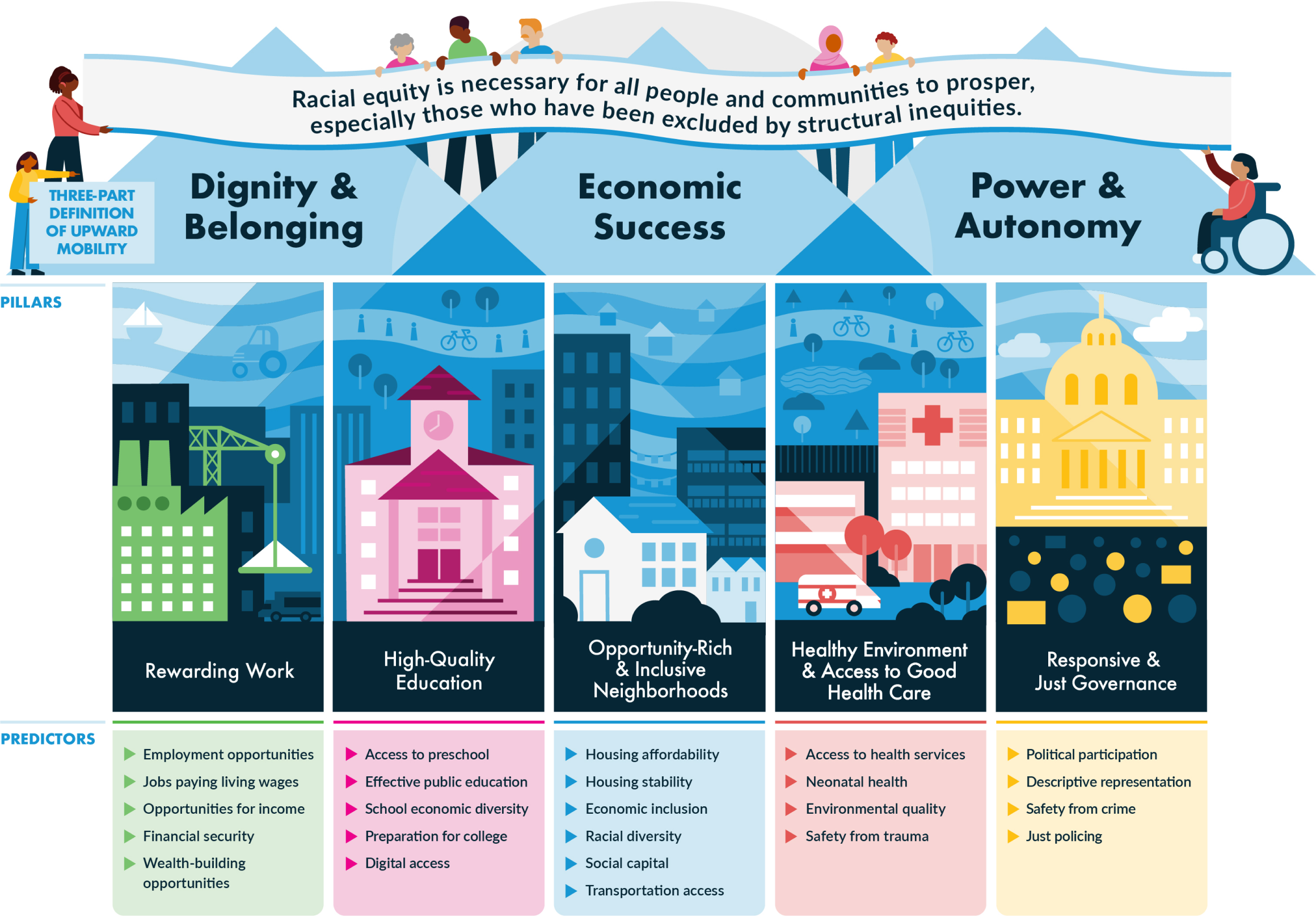
Neighborhoods are where children experience critical steps in their social, emotional, and physical development, where they form influential ties with peers, role models, and mentors, and where they access essential public services like schools, safety, recreation, and a healthy environment.
Place-conscious public policies improve people’s lives
We know how public policies built separate and unequal neighborhoods that continue to isolate and undermine too many low-income families (especially families of color). The challenge now is how to fix the problem—to ensure every child grows up in a great neighborhood.
And the latest Chetty evidence confirms public programs can work. But there’s no silver bullet. Success requires sustained commitment to a three-prong, place-conscious strategy:
- revitalize neighborhoods suffering from disinvestment and isolation (while preserving affordable housing so people with low incomes aren’t forced out);
- forge stronger links between low-income neighborhoods and nearby opportunities and assets (because we don’t have to get everything we need from our immediate neighborhood); and
- expand affordable housing in neighborhoods already rich with resources (and support people who want to move there).
How local leaders can turn this research into action
Cities and states don’t have to wait for the next generation of investments from the federal government to pursue this strategy; they have plenty of tools at their disposal. They can:
- Leverage local zoning and land-use powers to influence where housing is built and how much it costs.
- Deploy city and county departments to make all neighborhoods safe and environmentally healthy.
- Invest in affordable housing preservation and production, so families with low incomes can either move to or stay in opportunity-rich neighborhoods.
- Plan capital investments that ensure the quality and accessibility of vital public assets, including schools, parks, and recreation centers.
- Define enrollment boundaries and eligibility rules that can bring kids from different neighborhoods together in local schools.
No single program, investment, or regulatory reform can do the whole job. Communities crafting a place-conscious strategy can find specific evidence-based interventions to adopt, adapt, and combine in the Results for America Economic Mobility Catalog and from the Housing Solutions Lab.
Fixing entrenched patterns of neighborhood isolation, disinvestment, and distress is feasible, but it won’t be easy or quick. Progress takes time, and the full benefits won’t be apparent until children grow up. In the meantime, local leaders should assess their communities’ current conditions and track progress over time using Urban’s Upward Mobility Dashboard.
