
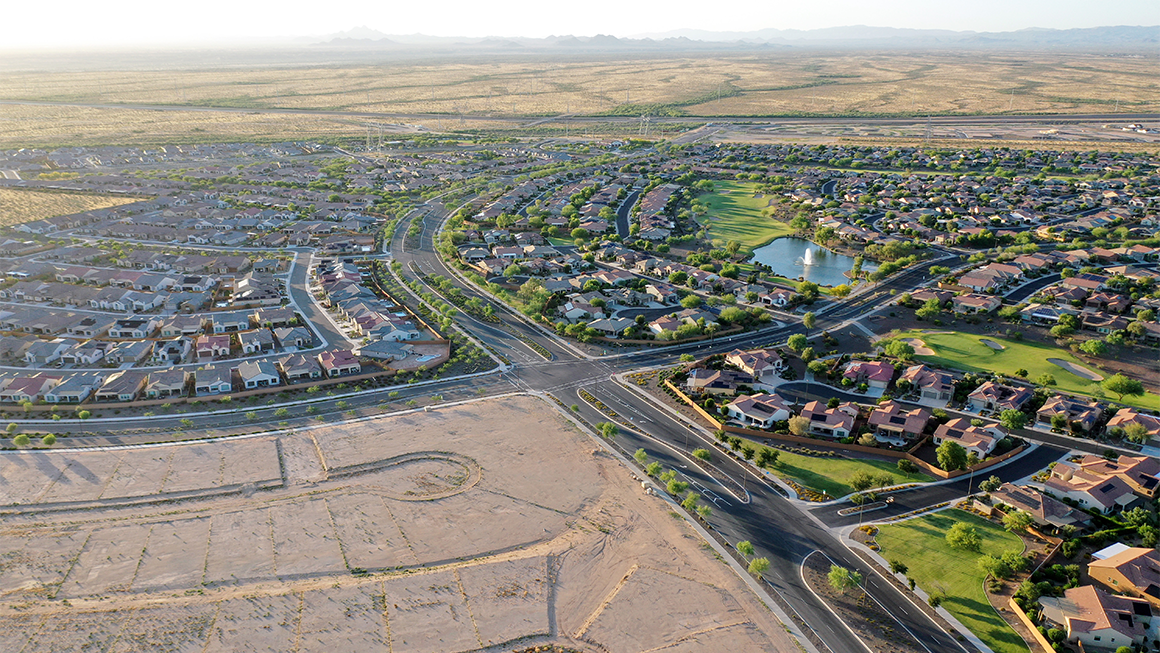
America is in the middle of an affordable housing crisis, driven partly by a significant shortage of available homes. Local land-use regulations play a large role in housing supply and affordability. They dictate where housing can be built, its size, and its uses. Many localities have used large-lot, single-family zoning regulations to block the construction of affordable homes and apartments, especially in higher-income areas where few affordable units are available. One result is higher housing costs for everyone.
Federal policymakers on both sides of the aisle are paying attention to the problem and looking for opportunities to encourage localities and states to make changes. This Congress’s two major pieces of housing-related legislation—the 21st Century ROAD to Housing Act (ROAD), passed by the Senate (in a somewhat modified form), and the Housing for the 21st Century Act (H21), passed by the House—include similar initiatives designed to better encourage localities and states to unlock the potential for housing construction through zoning and land-use changes.
As both chambers of Congress look to negotiate a final bill package that could increase housing affordability, they have opportunities, big and small, to ensure land-use interventions more effectively help achieve this goal.
How Congress is proposing to adapt land-use policy to expand housing supply
In these bills, Congress’s approach to encouraging more housing production through land-use policy takes several forms.
- Instituting best-practice guidelines. Both ROAD and H21 would require the US Department of Housing and Urban Development (HUD) to produce or share best-practice guidelines for state and local land-use regulations, helping provide strategies for governments that are considering implementing them. H21, for example, mandates that HUD create guidance to “support production of adequate housing to meet the needs of communities and provide housing opportunities for individuals at every income level across communities.” The bill also asks HUD to create guidelines for single-stair apartment buildings, which could help reduce construction costs and thus improve affordability by reducing the amount of space needed for in-building circulation (ROAD does not include such a mandate).
- Permitting and planning assistance. Another impediment to building new housing is securing permits and design approvals from various local government departments. Each bill includes new grant programs to assist local, state, and tribal governments in implementing prereviewed housing designs and better planning efforts to support increased supply. Though ROAD authorizes $200 million to fund communities that are adding homes, it does not appropriate that funding; this would require future legislation.
- Incentivizing housing production. Finally, ROAD includes a proposal to reward or punish city and county recipients of Community Development Block Grant (CDBG) funding based on whether they have added a reasonable amount of housing in recent years. The formula in the law would not punish communities with low housing costs and high vacancy rates, where developers are likely less interested in investing in new housing. This system could encourage some well-off localities to make regulatory changes designed to spur the construction of more homes.
To find out which communities stand to gain and lose the most if this policy were enacted, I analyzed recent HUD and Census Bureau data—though not the exact same HUD would use if the policy were passed into law, because those data are not readily available. Some of the communities I project would lose the most funding under this proposal, such as the city of Los Angeles and Nassau County, New York, have had leaders with a history of seeking to avoid allowing adequate construction of housing in well-resourced neighborhoods.
This is not a comprehensive review of the many promising provisions in both ROAD and H21 that could advance national housing affordability.
Additional solutions to improve housing affordability
These legislative proposals are a clear signal that elected officials in Washington are aware that local land-use policies can impede adequate and affordable housing for all. Nevertheless, ROAD and H21 have limitations that may reduce their effectiveness. Congress could consider taking the following steps to further improve affordability.
- Ensure federal agencies are equipped for implementation. Both bills direct HUD to create guidelines, distribute grants, and manage CDBG recipients. These requirements could impose a substantial burden on a federal executive agency that has, over the past year, been subject to major job cuts and large budgetary changes. Congress should reverse these cuts to guarantee that HUD can support its new mandates.
- Require coordination between housing and transportation planning. An earlier version of ROAD proposed to partly tie funding for transit improvements to action by communities to implement prohousing land-use policies along the route of a proposed line. This would be a step toward encouraging better links between land use and transportation, potentially resulting in more residents having the option to take advantage of clean, congestion-free public transit. This element should be restored to the legislation. It would also be more effective if it required metropolitan planning organizations receiving federal transportation funding assistance to develop housing coordination plans, which were mentioned in the 2021 Bipartisan Infrastructure Law but never required or even described by the federal government. These plans could help ensure transportation investments are associated with efforts to concentrate housing in areas accessible to multiple modes of environmentally friendly mobility.
- Reward housing supply growth on a larger scale—and invest directly in new supply. ROAD’s proposed effort to reward or punish local jurisdictions that receive CDBG funds based on their housing supply growth may be limited by the small amount of funding available from the CDBG program: about $3.3 billion nationwide annually. I estimate that the median community receiving a bonus would receive only about $55,000 a year—not enough to pay for a single additional staff member or a single housing unit in most places. Following this model, Congress should leverage other mechanisms with a larger scale. For example, it could condition a share of federal transportation assistance to communities based on their housing supply growth. Congress should also invest directly in new housing supply to help provide affordable housing directly in communities, such as by renewing and expanding the public housing program to support housing construction by new local initiatives, such as Seattle’s social housing program.
Making America’s housing more affordable will rely heavily on local policies, but Congress has a critical leadership role. Congress’s proposals to leverage land-use policy as a tool to build more affordable housing is a welcome departure from years of inaction in this policy area. But additional work is needed to ensure final housing legislation best achieves this goal.
