
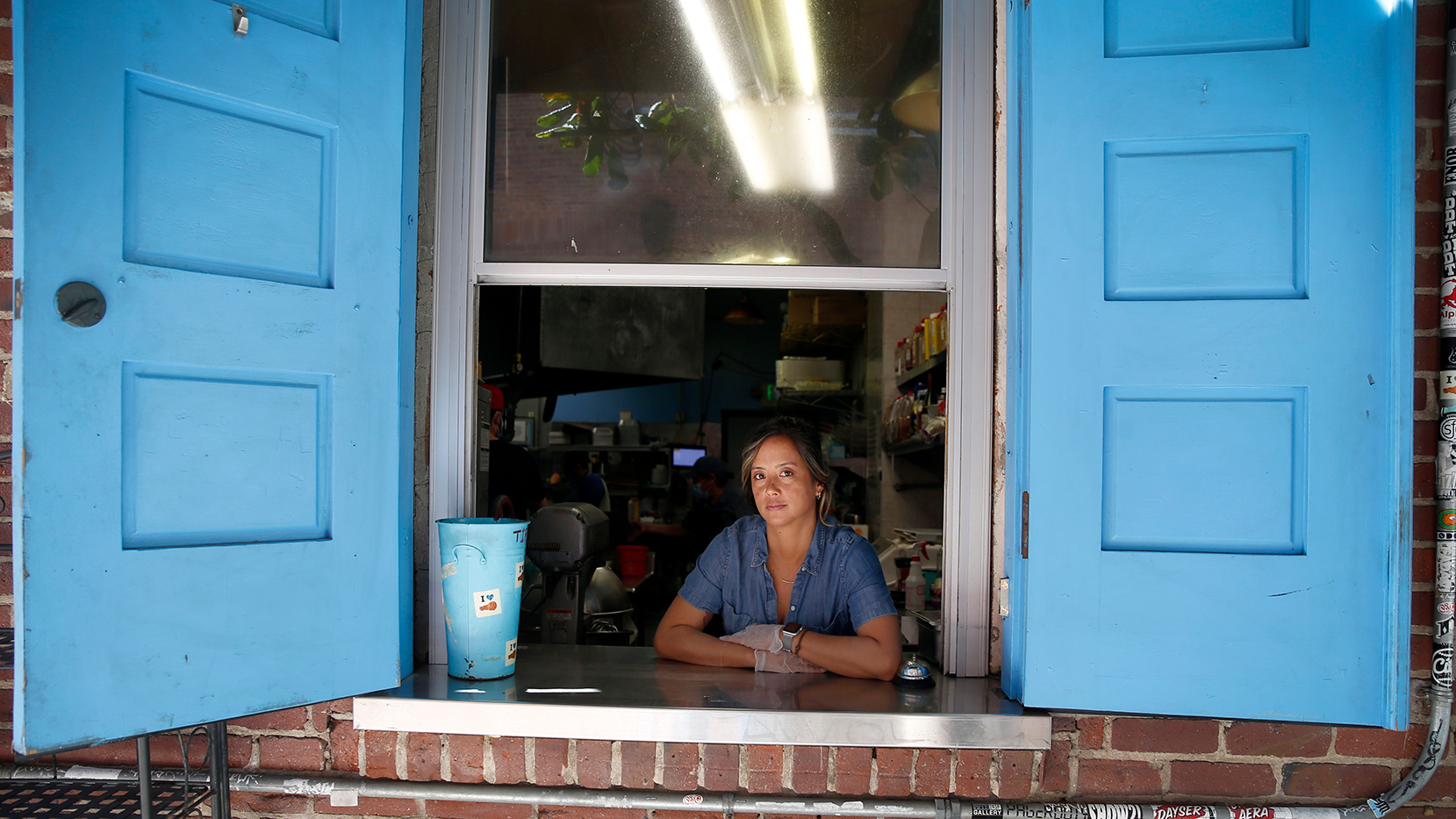
Small businesses significantly contribute to local economies: Firms with fewer than 50 employees employ 44 percent of workers (PDF) in the US. They drive innovation, provide critical goods and services, and foster a sense of belonging and place (PDF). In addition to supporting local economic growth and prosperity, small businesses can also be a wealth-building tool.
But economic uncertainties over the past several years, including inflation, evolving tariff policies, and a shrinking labor pool resulting from immigration crackdowns, have taken a toll on small businesses. Urban Institute research shows that the local regulatory environment significantly shapes small business’ ability to thrive. San Francisco offers one example for how local governments can successfully lower barriers for entrepreneurs and small business owners.
San Francisco focused on two policy areas to encourage the startup and sustainability of small businesses
From 2018 to 2025, under Mayor London Breed, the City of San Francisco enacted a suite of policies aiming to make it easier for small businesses to launch and operate. The city established them in part because of the COVID-19 pandemic’s effect on small businesses, and in part because a series of surveys (PDF) commissioned by the San Francisco Office of Small Business found that only about 20 percent of surveyed business owners agreed that San Francisco was a good place to own a small business. And even fewer respondents (12 percent) agreed that San Francisco was doing a good job of supporting local small businesses.
San Francisco focused on reforms in two primary areas:
- Permitting reforms
Evidence shows streamlining permitting and licensing approvals is one of several promising policies (PDF) that can make it easier to own and operate small businesses. Proposition H, passed in 2020, made several improvements to the city’s permitting processes, including shifting approval action for most small businesses to over-the-counter administrative approvals, streamlining the review and approval process to 30 days for most projects, and eliminating neighborhood notification for most storefront land-use changes.
Then, in 2021, the city government passed the Small Business Recovery Act, which expanded the impact of Prop H. Together, they eliminated months of permitting requirements and processes for businesses opening in San Francisco. Next, in 2023, a suite of small business permitting reforms outlined 100 changes to the city’s planning code across five main categories:
- allowing more business uses (including “flexible retail”) on the ground floor
- lifting restrictions on bars and restaurants along certain commercial corridors
- incorporating a new liquor-license type that would allow music venues to serve beer, wine, and liquor without excluding minors from the premises
- removing public notice requirements for certain changes in business uses
- enabling priority processing for nighttime entertainment venues, bars, and restaurants
As of December 2025, more than 7,000 projects had benefited from the streamlined permitting process approved in Proposition H and the Small Business Recovery Act, with many more expected to benefit from the additional changes made through the small business permitting reforms.
- Tax and fee reforms
Mayor Breed’s administration also enacted a series of legislation to reduce the burden of taxes and fees on small businesses:
- In 2021, it launched the First Year Free program, which waived the cost of initial registration fees, initial license fees, first-year permit fees, and other applicable fees for qualifying businesses (new businesses or new locations of existing businesses with $2 million or less in gross receipts).
- Next, it introduced Proposition M, which doubled the Small Business Exemption ceiling for both the city’s Gross Receipts and Overpaid Executive taxes, providing tax relief to more than 2,500 small businesses.
- In 2024, it indefinitely eliminated 49 annual license fees, which have a disproportionate effect on small businesses because of their regressive nature.
More than 11,000 businesses have enrolled in the First Year Free program since its launch, and the program has collectively saved small businesses more than $7 million in fees (data from Office of Treasurer and Tax Collector as of October 27, 2025). The program was extended, and expanded, four times because of its popularity and success, most recently in July by Breed’s successor, Mayor Daniel Lurie.
The elimination of license fees amounted to an additional $10 million in savings for small businesses annually—Breed’s office estimated that the waiver of license fees would result in 91 percent of restaurants and 87 percent of bars and nightclubs no longer having to pay any license fees at all.
Lessons for other cities
Cities across the country can apply the following lessons from San Francisco’s successful efforts to cut red tape and lower barriers for small businesses:
- Establish an office or commission dedicated to representing and serving the interests of small businesses. San Francisco established an Office of Small Business (and an appointed Small Business Commission to oversee the office) in 2003, whose mission is to “equitably support, preserve, and protect small businesses in San Francisco.” The office has been instrumental to many of the efforts described above and has provided critical insights based on staff members’ day-to-day experiences serving and interacting with small business owners.
- Pair legislative and policy change with personalized program assistance and other supports. Though policy change has been an important part of San Francisco’s efforts to reduce bureaucracy and has made it easier for small businesses to launch and operate, efforts to help small businesses navigate these changes and resulting new programs have been equally important.
The city established the San Francisco Permit Center in July 2021 to serve as a central hub for residents and small businesses to access 23 distinct service areas, such as from the Planning Department, Department of Building Inspection, Department of Public Works, and more. The Permit Center is also staffed by two small business permit specialists, who help entrepreneurs and businesses owners through every step of the permitting process. Since its opening, the Permit Center has served more businesses each year (PDF), illustrating strong demand and a previously unmet need for personalized assistance on the part of San Francisco’s small businesses. - Create a clear and compelling small business agenda. The Roadmap to San Francisco’s Future (PDF), which outlined nine strategies to reinvigorate downtown and “reaffirm San Francisco as a thriving global destination and the Bay Area’s economic center,” shaped Mayor Breed’s priorities. One of the nine strategies was to “make it easier to start and grow a business,” and having such a clearly articulated priority doubtless helped guide the administration’s efforts to implement related reforms. Many of the Breed administration’s reforms have also been continued by the Lurie administration, suggesting that supporting small businesses is a popular priority that can be sustained over political cycles.
