
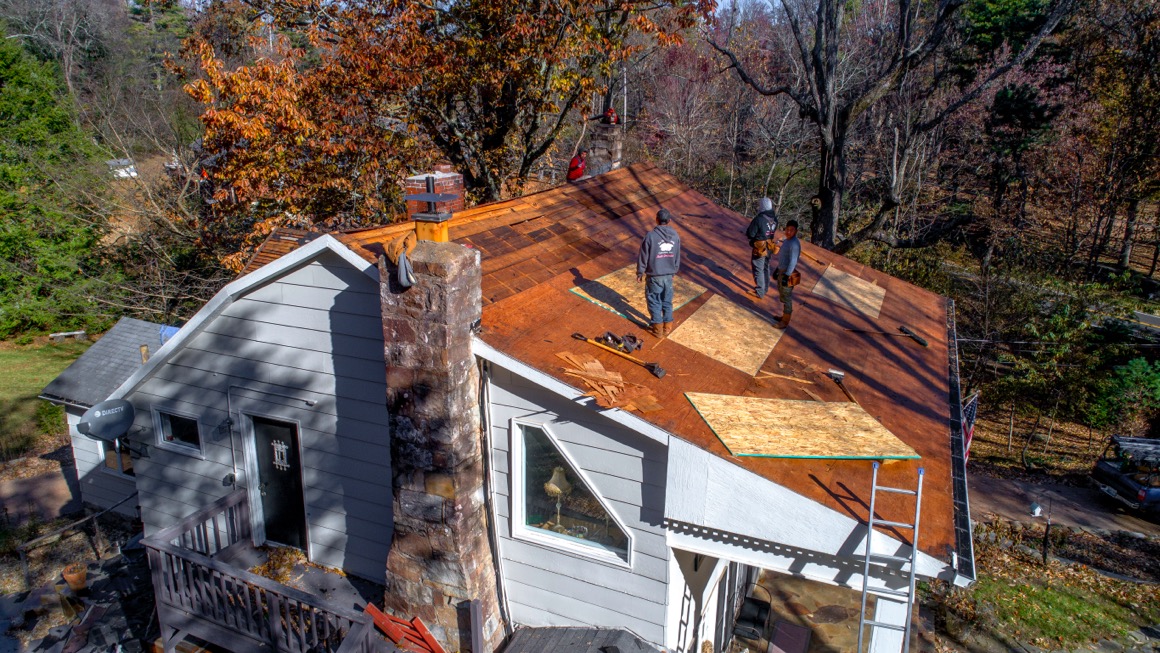
The US housing stock is aging rapidly, the result of low levels of new construction over the past 20 years. According to the US Census Bureau, more than half of homes were more than 40 years old as of 2023. At the same time, only 0.25 percent of homes each year go obsolete, meaning they can no longer be used for housing and disappear from the housing stock.
That’s because data show homeowners, who own about 77 percent of one-to-four-family homes, are continually investing in home improvements, extending the functional life of housing units and enhancing their quality and value. Annually, homeowners spend about 1 percent of the total value of residential housing stock on renovations.
But the value of these improvements is not explicitly accounted for in home price appreciation measures. In a new analysis, we find that repeat-sales home price indexes likely overstate the true rate of appreciation, with home prices appreciating about half as fast relative to inflation as the Federal Housing Finance Agency (FHFA) index suggests.
Though the US housing stock is aging, obsolescence remains remarkably low because of homeowners’ investments in renovations
Using annual American Community Survey data, we estimate that between 2013 and 2023, the total number of housing units (excluding manufactured housing) increased by 12.9 million units. About 15.7 million units built in 2000 or later were added to the housing stock, while the number of units built before 2000 decreased by 2.8 million units, likely reflecting obsolescence. Of these 2.8 million units, 2.1 million were single family. For our analysis, we don’t consider manufactured housing units because many units that have exited the housing stock were manufactured housing units built before 1977, when the US Department of Housing and Urban Development code went into effect (PDF).
Meanwhile, the median year a unit was built increased by only five years between 2013 and 2023, indicating that the share of older homes has grown.
We find that between 2013 and 2023, the annual rate of obsolescence for all single-family homes (i.e., properties with one to four units) is 0.21 percent. The rate is slightly higher (0.25 percent) for single-family homes built before 2000. These rates are marginally higher for all housing units.
This low obsolescence rate is driven in large part by the amount of money put into improving homes each year.
According to data from the 2023 American Housing Survey (AHS), homeowners spent approximately $825 billion on home improvements between 2021 and 2023. That’s roughly 2 percent of the value of residential housing stock owned as a primary residence in 2023 ($40.6 trillion) over the two-year period, or 1 percent on an annualized basis. This percentage has remained broadly consistent. If we exclude homes that had disaster renovations, the result is still about 1 percent per year.
The FHFA House Price Index likely overestimates the rate of home price appreciation
Most home price indexes are repeat-sales indexes, meaning they compare the price of a home when it’s bought with the price when it’s resold and then tally the appreciation. Repeat-sales home price indexes are constructed by repeating this process for a large number of homes bought and sold at different times.
Index designers account for outliers in which home price appreciation has been unusually robust, such as when a homeowner demolishes an old 1,500-square-foot home and replaces it with a 5,000-square-foot home. But because homeowners rarely live in the home when it’s undergoing this level of renovation, it would likely not be picked up as renovation expenses in the AHS.
Conversely, if a homeowner upgrades their kitchen or bathroom, it would be included in the AHS data but likely not be removed from home price indexes. This suggests these indexes don’t adequately account for any home improvements homeowners make, overstating the actual rate of home price appreciation.
To understand how much repeat sales indexes inflate appreciation, we can deduct the annual rate of spending on renovations from the annual rate of appreciation. We use the FHFA’s monthly home price index for this analysis.
From the first quarter of 2000 (Q1 2000) to Q1 2025, cumulative home price appreciation was 214.2 percent, with the FHFA’s House Price Index increasing from 100 to 314.2. That’s an annual appreciation rate of about 4.6 percent.
If we deduct the annual investment in home improvement, we can assume the actual appreciation was 1 percent lower per year. That means the home price index would have increased to only 245.3 from Q1 2000 to Q1 2025.
Based on the FHFA’s index, home prices increased 126.3 percent faster than the consumer price index over the same period. But our adjusted index suggests that the FHFA’s index inflates this rate, estimating that home prices increased only 57.5 percent faster than the consumer price index over this period.
One limitation of this analysis is that homeowners’ investments in home improvements don’t always translate to a dollar increase in home values. This relationship varies widely depending on the projects and markets, making it difficult to precisely measure the portion of home price appreciation attributable to these investments. As a result, the adjusted estimates presented here should be interpreted as illustrative rather than definitive.
Even with this limitation, the core implication remains: because standard repeat-sales home price indexes don’t explicitly account for routine home improvements, they are likely to overstate both true home price appreciation and the extent to which home prices have outpaced inflation.
