
Nearly half of all women (PDF) have experienced domestic violence from an intimate partner—or intimate partner violence (IPV)—in their lifetime. Extensive evidence shows men are most often charged with IPV and that experiencing trauma—such as experiencing childhood physical abuse or witnessing IPV as a child—is associated with perpetrating IPV.
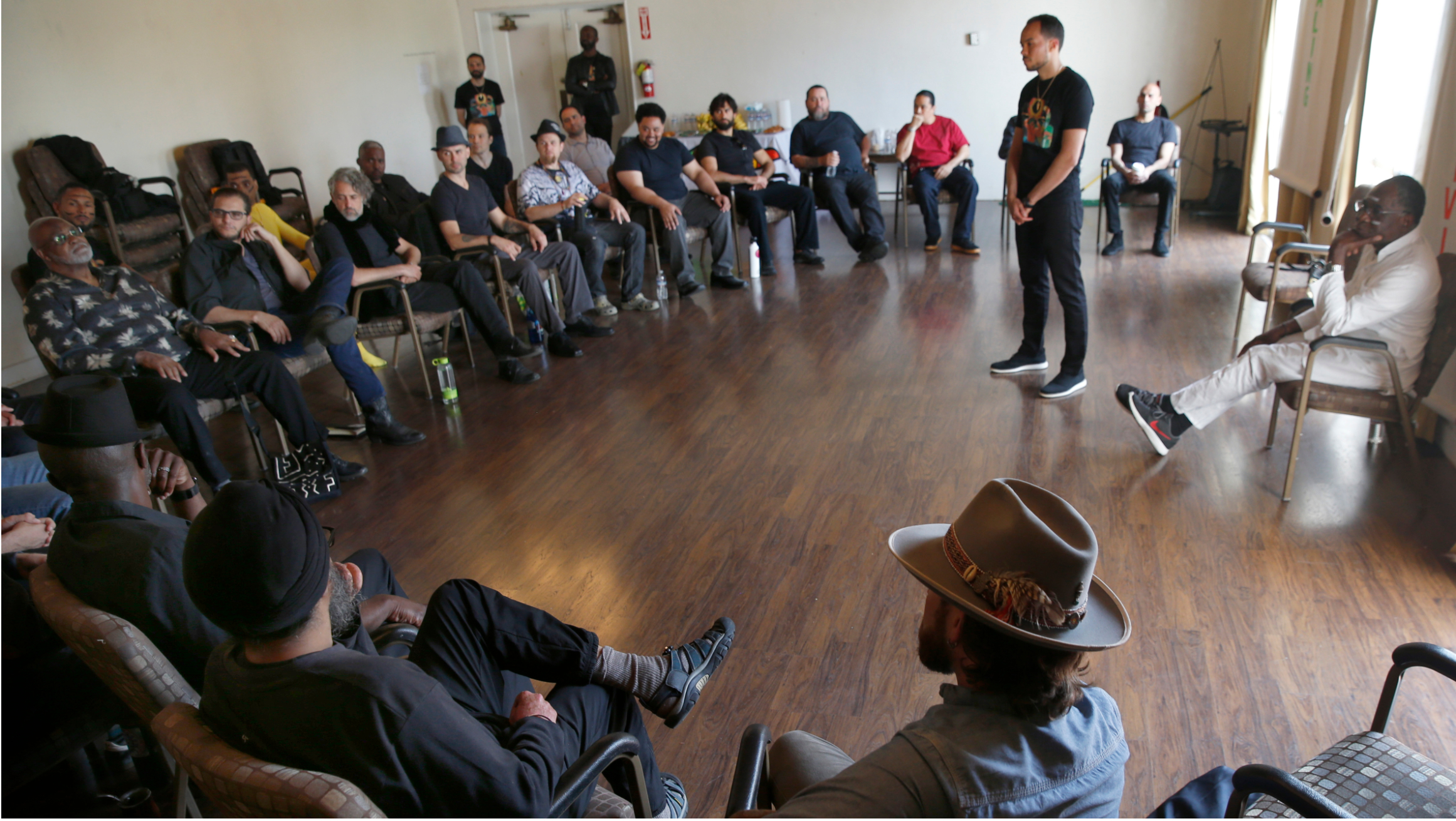
Abuse intervention programs (AIPs), also called batterer intervention programs and abusive partner intervention programs, are one of the most common court-mandated group interventions for people charged with IPV-related harms. These programs have historically served cisgender and heterosexual men and have used a universal approach in which most participants receive the same type of intervention around the same length of time.
But research shows providing greater intervention to people at higher levels of risk for violence could more effectively prevent IPV. Over the past several years, the Urban Institute has been studying the evolution of AIP services, the challenges AIPs navigate to provide effective intervention programming, and their work with marginalized populations.
Based on our research and literature from the field, here are four innovative strategies AIP court staff, funders, and program staff can consider implementing to reduce IPV.
1. Modify abuse intervention programming based on risk for causing violence
Through the risk-needs-responsivity framework, research shows programs that provide tailored services to people at highest risk for causing violence most effectively reduce it, and evidence shows that framework holds true for people who cause intimate partner violence.
Our national survey of 285 AIPs across 48 states and four in-depth case studies in Kansas, Utah, Colorado, and New Jersey found that AIPs are using risk assessments to identify clients’ risk of repeated IPV and then modifying the interventions through additional requirements:
- longer interventions over time for higher-risk individuals
- more in-depth programming for higher-risk individuals
- attendance to a mix of group and individual sessions for higher-risk participants
Our survey found approximately 35 percent of AIP staff believe that providing differentiated treatment based on clients’ risk levels was the most important use of risk assessments to change participants’ abusive behavior.
2. Provide housing for high-risk participants
The Utah site from our case study had a residential program at a separate location from their headquarters for people at elevated risk of causing harm. Participants lived in separate rooms in a house and shared kitchen and living room spaces. Group sessions were held in this house. Participants were required to remain sober and to give a third of their income to the program and a third to the victim (this could be through child support), and they kept a third.
Program staff described this residential program as a way to assist those with complicated histories living with others and practicing healthy interactions. The residential program hasn’t been renewed or evaluated because of funding challenges. Still, similar residential programs for people at high risk of violence in prisons show promise in reducing future violence.
3. Address participants’ past trauma
Because of the link between trauma and IPV perpetration, AIPs are increasingly addressing trauma and accountability in their interventions.
In our survey of 285 AIPs, about 31 percent reported matching their intervention to clients’ trauma. In our Kansas case study site, staff developed the curriculum using the “River of Cruelty” (PDF) at its foundation. As the program’s foundational philosophy, it guides participants to be accountable for their harmful actions, recognize the cruelty they have done to others, and be responsible for healing from cruelty they have experienced. AIP participants discussed how the River of Cruelty allowed them to understand that cruelty can stem from past generations and that they can “stop the river” by preventing cruelty from continuing on to future generations.
Relatedly, we recently completed an evaluation of the Trauma-informed Abusive Partner Intervention Program (TI-APIP) in Manhattan. The TI-APIP was a 26-week AIP for individuals charged with IPV and was created to incorporate trauma. From early process evaluation findings, we learned that some elements of the staff’s approach to addressing trauma included combining the power-control wheel from the Duluth model with opportunities to discuss injustices, checking for and addressing indicators of hypervigilance and trauma responses during facilitation, intentionally hiring staff with clinical and social work expertise, having flexible absence practices, and providing and referring out for wraparound services.
Our full evaluation found that the program served men, and nearly 90 percent of them had witnessed some form of previous trauma. Further, we found that TI-APIP participants were statistically less likely than comparison group participants to be arrested within 12 months after the intervention.
4. Tailor programming to specific populations
A large sector of the AIP field has relied on the Duluth Model, which examines how patriarchy, power, and control influence violence that men often perpetrate in heterosexual relationships. Aspects of Duluth, such as the power and control wheel, may be helpful to stop violence. However, scholars have pushed for evidence-based programs that meet the intervention needs of noncisgender heterosexual people, men of color, and women.
Our research shows AIPs are expanding to meet the needs of people who cause harm who are not white men. Our AIP case study sites in Colorado and Kansas reported having LGBTQ-only AIP groups, and the sites in New Jersey and Kansas offered Spanish-speaking groups. Three sites offered group programming solely for women.
These results are consistent with our findings from the survey, where about 14 percent of responding AIPs offered specialized programming to LGBTQ people, 24 percent offered programming to Latinx people, and 64 percent offered programming for women who cause IPV.
We find AIPs are increasingly evolving as the programs begin better understanding the populations they serve and how to meet their unique needs. Research suggests this shift away from traditional uniform programming may more effectively reduce recidivism and intimate partner violence.
This project was supported by Grant No. 15JOVW-23-GG-04437-MUMU awarded by the Office on Violence Against Women, US Department of Justice. The opinions, findings, conclusions, and recommendations expressed in this blog post are those of the authors and do not necessarily reflect the views of the US Department of Justice.
