
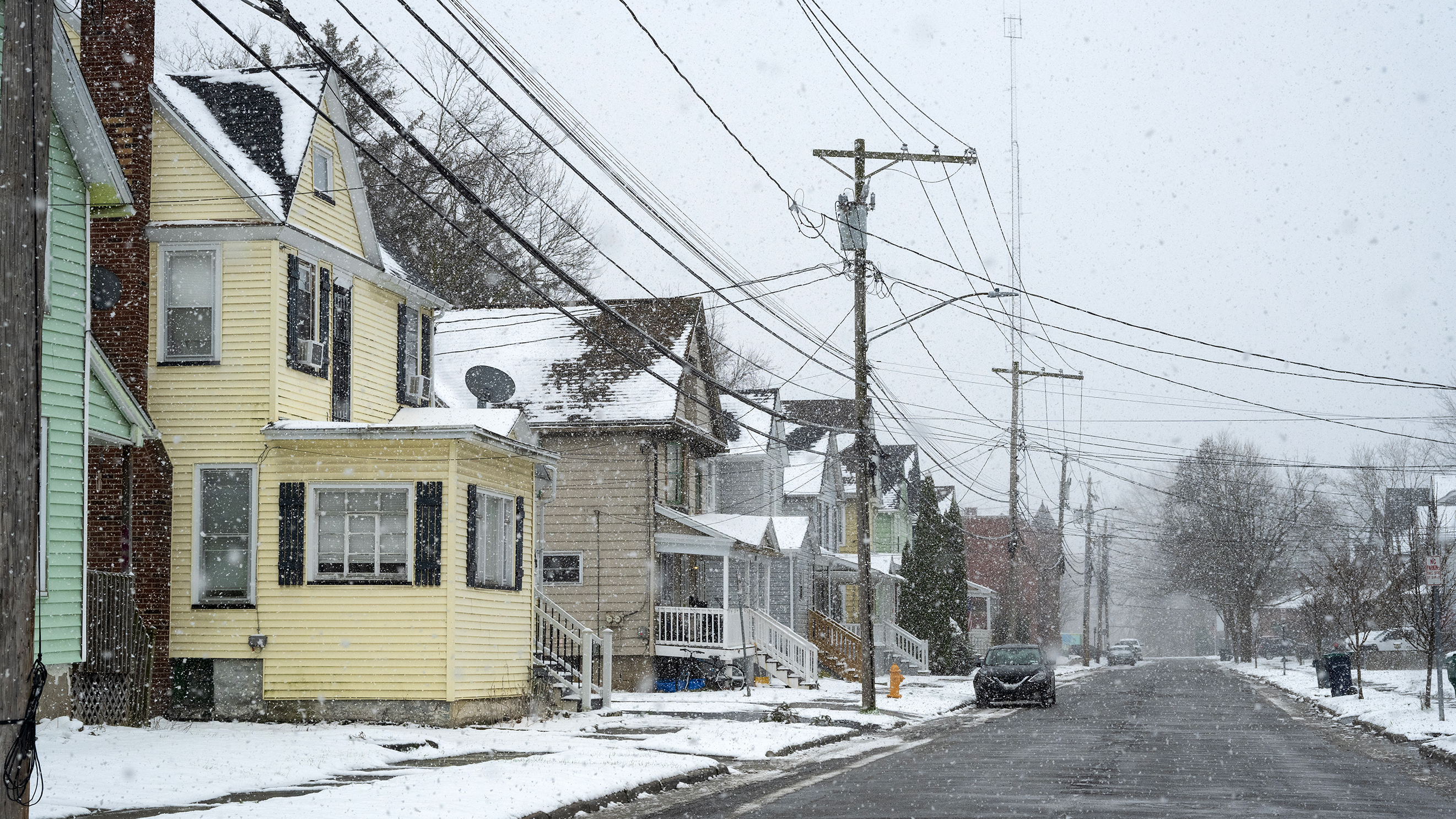
Across the US, rising energy costs are worsening the affordability crisis.
Over the past two years, electricity prices have risen faster than inflation. More than half of electric and natural gas customers nationwide will face increased utility rates—or proposals for rate increases—by 2027. These costs are expected to rise as the country’s aging energy infrastructure struggles to keep pace with skyrocketing demand, driven in large part by AI data centers.
In the coming years, local policymakers and utilities will have to grapple with how to balance short-term energy reliability and affordability concerns with long-term investments in structural changes that can deliver a more resilient, flexible, and efficient energy grid.
To do this, they will have to navigate complex, fragmented energy systems. Each region, state, and locality has unique regulatory environments, utility structures, and local economic and climate conditions that shape local energy costs and the solutions available to local leaders. In the face of this complexity, households are often not well represented or meaningfully integrated into solutions.
We offer three evidence-backed priorities local policymakers can embrace to better center households as they work alongside state energy commissions and utilities to tailor energy solutions to their communities. Using these principles can help provide relief to households facing energy insecurity and build an energy system fit for the future.
1. Provide immediate assistance to households most burdened by rising energy costs.
Energy burden—the share of household income spent on energy—varies widely across income levels.
As Urban’s Financial Health and Wealth Dashboard shows, households with lower incomes and communities of color often face disproportionately high utility burdens. These households are at the greatest risk of having their power shut off, carrying utility debt, and having to make difficult trade-offs between energy and other essentials, with detrimental consequences for both their health and financial well-being.
To support households disproportionately burdened by rising energy costs, local policymakers and utilities could consider the following solutions:
- Bill assistance programs and utility disconnection protections. Utility assistance programs, funded primarily through the federal Low Income Home Energy Assistance Program and supplemented with state-run options and utility-specific plans, provide critical support for families struggling to pay bills.
Local leaders can help strengthen utility assistance programs by streamlining enrollment through better coordination across electric and gas utility assistance programs and automatically enrolling households who already participate in other assistance programs. Because federal resources for utility assistance are often unable to meet the scale of local energy assistance needs, leaders can supplement federal dollars with state or local resources.
Policymakers can help families avoid having their power disconnected by implementing seasonal shutoff bans. Debt management programs—especially when paired with financial counseling (PDF)—can also prevent cascading hardships, while helping utilities stabilize their revenues. - Income-based rate design and billing. To reduce uneven energy burdens and the risk of disconnection, state and local regulators can push utilities to design more-affordable rates by adopting percentage-of-income payment plans (PIPPs), low-income discount rates, and income-sensitive fixed rates that tie energy costs to household income.
Though these solutions can be complex for administrators because they require income verification and reenrollment, they create structural pathways for reducing energy burdens and stabilize household budgets for those who need the most relief. Building affordability into ratemaking can also reduce the costs of service (PDF) for utility companies. - Separate tariffs for customers who use large energy loads. As demand from AI data centers and other large-scale energy users grows, regulators can create separate tariffs for these customers to avoid shifting infrastructure costs onto residents.
Shifting from specialized contracts between energy providers and large-scale energy users, often negotiated under nondisclosure agreements, to large-load tariffs with predefined terms and conditions set by a utility commission can help leaders keep these customers accountable. It can also increase transparency and inform negotiations with large-load users on sourcing, pricing, load flexibility, contract duration, exit fees, and community benefits aligned with local economic development goals.
2. Help households reduce energy use and shift demand away from peak hours.
Lowering energy demand is one of the most effective ways to control costs for households. When families use less energy—or shift usage away from peak hours—they save money immediately and reduce their exposure to price spikes.
To help their community reduce energy use, local policymakers and utilities can consider the following solutions:
- Efficiency upgrades. Weatherization and appliance upgrades, such as heat pumps, can lower household energy bills significantly and reduce the need for energy assistance.
For decades, the US Department of Energy’s Weatherization Assistance Program (PDF) has helped households cut their energy costs by an average of 25 percent. The program has also improved health outcomes among participating households by addressing unsafe heating systems and poor indoor air quality.
Local leaders can expand access to these programs and help more families weatherize their homes by investing in weatherization readiness programs and blending federal, state, and local weatherization funds. - Time-of-use (TOU) pricing. Utilities can adopt TOU pricing structures to incentivize households to move energy-intensive tasks like laundry, dishwashing, and charging electric vehicles to off-peak periods. To maximize participation and savings, utilities can pair demand-shifting programs with consumer education and automation tools.
Policymakers and utilities can ensure TOU rates don’t penalize households with limited flexibility—such as those with critical medical needs, larger households, and renters—by prioritizing investments in baseline efficiency improvements for these households. - Virtual power plants. Utilities can provide incentives for households with smart devices, electric vehicles, or distributed battery storage to enroll in virtual power plant programs that aggregate distributed resources in homes to balance the grid.
3. Deploy distributed energy resources to make households part of the energy infrastructure solution.
Meeting the rising demand for energy will require new power generation, but large-scale projects are expensive and slow to build. Distributed energy resources—like rooftop solar and battery storage—are faster, lower-cost alternatives that benefit households directly. In regions facing rapid load growth, distributed resources can reduce the need for utilities to invest in expensive peak generation and transmission upgrades—a cost they ultimately pass to customers.
To effectively and affordably deploy distributed energy resources, local policymakers and utilities can consider the following solutions:
- Rooftop solar and storage. Rooftop solar, especially when paired with battery storage, can lower a household’s monthly energy bill, protect them from price volatility, and provide backup power during outages and extreme weather events. To effectively deploy distributed energy resources, policymakers can streamline permitting, consider deployment at the neighborhood scale, and invest in low-income solar and storage programs that target energy-burdened households and neighborhoods.
- Community solar. For renters and households with aging roofs, community solar offers shared access to clean energy and bill credits without requiring home installation. These programs can be structured to prioritize households with low incomes and to deliver guaranteed savings.
- Integrated planning. Utilities should align electricity and gas planning (PDF) to avoid duplicative investments. As part of this planning, state and local regulators should design rates for distributed energy resources that adequately compensate participating households for the energy and capacity they provide to the grid without raising prices for households unable to invest in clean energy.
By centering households in ratemaking and infrastructure planning, local leaders can build an energy system that’s affordable and resilient—ensuring this moment of growth and energy transition can provide relief to the most energy-burdened households.
