
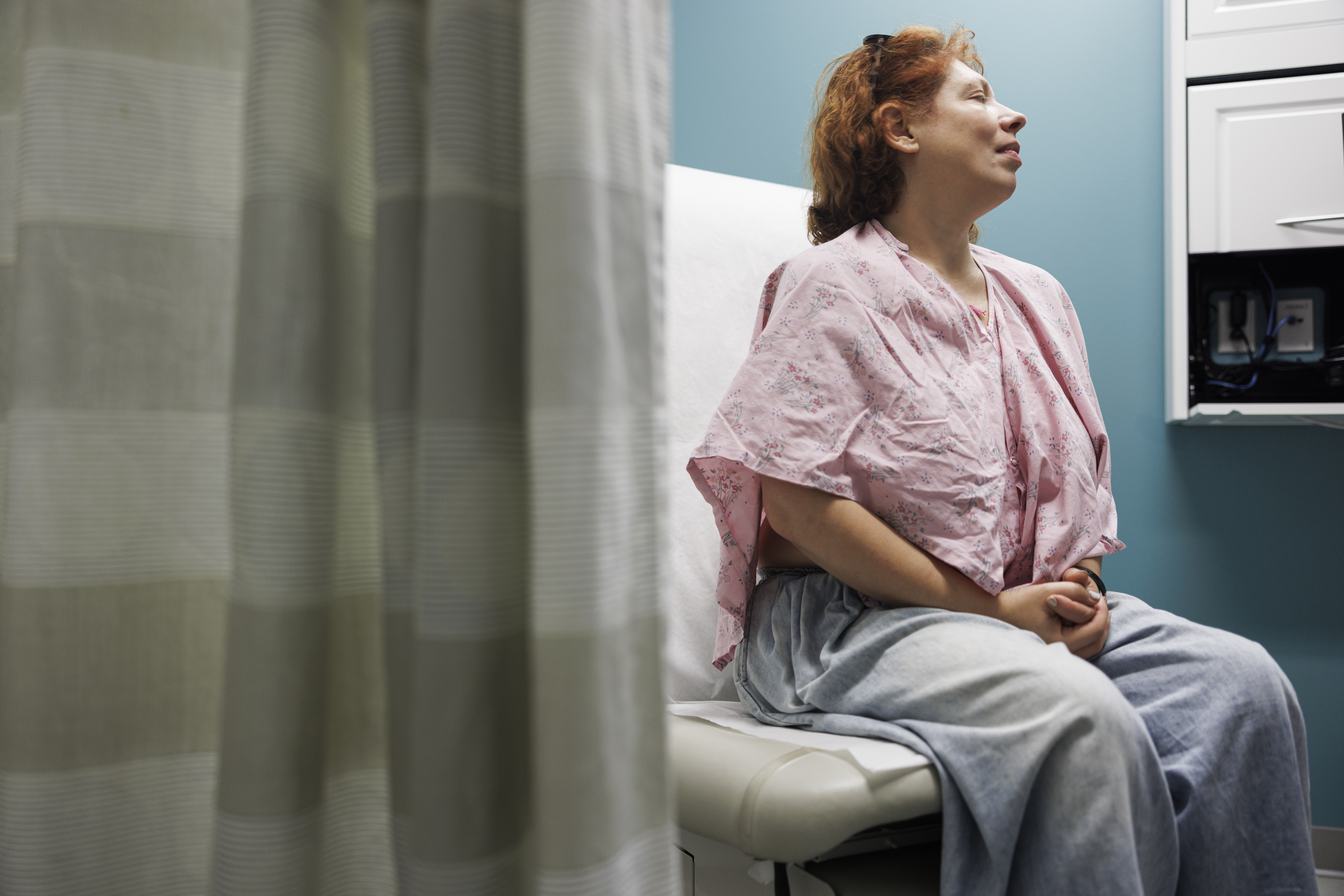
A new federal rule instructing states on how to implement forthcoming Medicaid work requirements (also called community engagement requirements) could lead to widespread loss of Medicaid coverage and health care for people with serious health conditions.
In June 2026, the Centers for Medicare & Medicaid Services (CMS) issued an interim final rule providing states with implementation guidance for the new Medicaid work requirement established by last year’s One Big Beautiful Bill Act (OBBBA). Beginning in January 2027, applicants and enrollees must demonstrate that they are engaged in work, school, community service, or a work program for at least 80 hours in specified months to receive Medicaid coverage through the Affordable Care Act expansion. Some people are exempt from the work requirement, including those who can show they meet state criteria for medical frailty or special medical needs.
In this article, we summarize findings from our recent comment letter explaining why the rule’s restrictive definition and procedures for establishing medical frailty will place many vulnerable Medicaid beneficiaries with serious health issues at risk of losing coverage.
A new restriction on the medical frailty definition included in the rule will likely result in substantial Medicaid coverage losses for people with serious health issues
Under the OBBBA, individuals are exempt from the work requirement if they are deemed medically frail based on:
- blindness or disability as defined under Section 1614 of the Social Security Act;
- a substance use disorder;
- a disabling mental disorder;
- a physical, intellectual, or developmental disability that significantly impairs the ability to perform activities of daily living; or
- a serious or complex medical condition.
These categories are largely consistent with a longstanding federal definition of medical frailty that states anticipated the OBBBA would use. States such as Nebraska have used that definition to develop detailed lists of diagnosed health conditions that could support automated verification of medical frailty status.
However, the rule imposes an additional restriction. To qualify for a medical frailty exemption, an individual must have a health condition that “significantly impairs the individual’s ability to comply with the community engagement requirement.” This restriction does not appear in the statute and, as shown below, will exclude many people with major health needs.
Our analysis of Medical Expenditure Panel Survey (MEPS) data shows that many Medicaid enrollees ages 19 to 64 without self-reported work limitations still report major or ongoing health needs. These enrollees are at risk of losing essential health care, even if they are working, because of the paperwork burdens that appear to drive the majority of coverage losses under work requirements. About 1 in 4 say they are in fair or poor health, while more than half take prescription medications and nearly one-third have annual health expenditures of $2,000 or more. These results are consistent with previous research showing a high prevalence of chronic conditions among Medicaid expansion enrollees, regardless of their self-reported ability to work.
Thus, many adults may not meet the restrictive medical frailty definition included in the interim final rule despite having significant health needs. Unless these individuals can obtain another type of exemption or successfully complete and report on qualifying activities, they will lose Medicaid coverage and be at risk of clinical destabilization. Prior experiences with work requirements in Medicaid suggest that many of these adults could lose coverage because of difficulty navigating the reporting and documentation process, even if they are engaged in qualifying activities or have characteristics that should make them exempt.
Documentation requirements could put Medicaid coverage at risk for many with serious health conditions that impair their ability to work
The restrictive definition of medical frailty will hinder states’ ability to automatically exempt individuals who meet the rule’s narrower exemption criteria for medical frailty, while limits on self-attestation will increase barriers to manual verification.
Beginning in 2028, the rule stipulates that states may only accept one self-attestation of medical frailty per continuous enrollment period and requires confirmation via data or documentation at the subsequent Medicaid renewal six months later. The rule further requires states to reverify medical frailty at least every 12 months.
Prior experience with work requirements in Arkansas and New Hampshire shows that among enrollees who were not automatically deemed compliant or exempt using data available to the state, 70 to 80 percent did not successfully report compliance or obtain an exemption. As a result, these individuals were disenrolled or on the verge of disenrollment, even though many appeared to have characteristics that would make them compliant or exempt. Enrollees faced considerable difficulty learning about the policy, understanding state notices, and using state reporting systems, even when they only had to self-attest to their exemptions, as in Arkansas.
The added documentation requirements that start in 2028 will create much higher barriers to obtaining a medical frailty exemption. In some cases, patients may need to provide attestation from a health care provider, but the rule does not explain how providers should determine whether their patients have a significant impairment that limits their ability to meet the work requirement. In New Hampshire, health care providers were reluctant and often unwilling to certify that their patients’ health conditions prevented them from working the requisite number of hours. Providers have said their reluctance to provide documentation of medical frailty for the OBBBA work requirements stems from lack of training to assess work impairments, lack of time to complete additional paperwork, and fear of professional or legal repercussions for making inaccurate certifications.
Although the rule directs states to use Medicaid claims and encounter data to determine medical frailty exemptions without requiring enrollees to submit additional information, claims data lack explicit information on work impairment, and to our knowledge, no other reliable data sources that cover all enrollees are available to states.
The rule also limits the look-back period of relevant claims to 12 months. This restriction risks not identifying exempt enrollees with chronic medical conditions who have not received recent medical care, including those who experience churning in their insurance coverage or have difficulty finding available providers. Though this approach may identify some beneficiaries whose conditions limit their ability to work, as shown in the figure below, it would miss many other enrollees with work impairments.
MEPS data show that among Medicaid enrollees ages 19 to 64 with work limitations, 4 in 10 did not report receiving treatment over a 12-month period for one or more diagnosed conditions used for prior state medical frailty determinations. And the share of enrollees that states could automatically determine to be medically frail would be lower if a qualifying condition must be paired with certain levels of health care utilization.
States will have trouble automatically exempting enrollees with work impairments, leading to coverage loss and worse health outcomes
Determining which enrollees have a work impairment based on their health conditions and use of health care is challenging for several reasons.
- How a health condition affects a person’s ability to work is dynamic and unpredictable and is influenced by disease progression, symptoms, and the process of recovery or rehabilitation.
- How a health condition affects workforce participation also varies based on an individual’s circumstances, including their educational attainment, work experience, the jobs available to them, the extent to which a condition interferes with their ability to perform physical labor or cognitive functioning, other employment barriers, and the availability of workplace accommodations. Many people can engage in some work but have impairments that prevent them from working consistently. The OBBBA provides no additional funding for work supports, job search assistance, job training, or other services to facilitate employment. It also does not address structural challenges finding and maintaining stable employment in the low-wage labor market.
- There may be a significant delay between the decline in a beneficiary’s work capacity and the visibility of their diagnosis in claims data. An individual’s symptoms may precede their diagnosis by months or years, during which time they may reduce their work activity. But under the rule’s criteria, beneficiaries would be at risk of disenrollment before they receive a diagnosis or before that diagnosis and associated service use would be reported in claims.
- For people with health conditions, the ability to work often depends on timely access to treatment. Along with impeding the ability to obtain documentation of medical conditions from a health care provider, loss or denial of coverage would inhibit access to care that improves functioning and workforce participation.
The interim final rule’s definition of medical frailty and required verification processes will likely result in substantial coverage losses for adults with serious health conditions. Loss of coverage would in turn reduce access to health care and could also lead to burdensome costs for individuals and uncompensated care for health care providers. Extensive evidence shows that coverage loss leads to worse health outcomes and higher mortality rates. The rule’s regulatory impact analysis does not take into account these consequences and costs associated with loss of Medicaid coverage.
Read the full comment letter here.
This analysis was funded by the Robert Wood Johnson Foundation. We are grateful to them and to all our funders, who make it possible for Urban to advance its mission. The views expressed are those of the authors and should not be attributed to the Urban Institute, its trustees, or its funders. Funders do not determine research findings or the insights and recommendations of Urban experts. Further information on the Urban Institute’s funding principles is available at urban.org/fundingprinciples.
